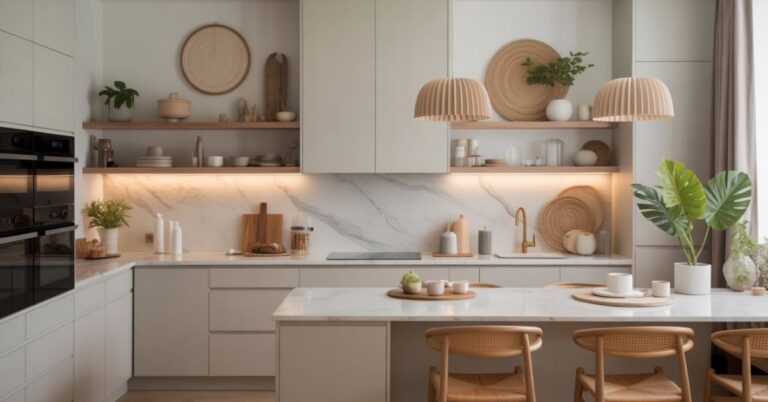
Japanese Kitchen Ideas Timeless Inspiration, Budget-Friendly Beauty, and Modern Minimalist Charm

A Japanese kitchen is more than just a place to cook. It’s a calm, intentional space where simplicity meets purpose and beauty is found in the everyday. Rooted in mindfulness and balance, Japanese kitchens feel peaceful, uncluttered, and deeply functional. They invite you to slow down, enjoy the process of cooking, and appreciate the quiet elegance of well-designed spaces.
If you’re drawn to serene interiors, natural materials, and thoughtful layouts, this guide will show you exactly how to bring Japanese kitchen style into your own home. Whether you live in a small apartment or a spacious house, you’ll discover design ideas, styling inspiration, and practical tips that feel modern, achievable, and perfect for Pinterest readers looking for calm and cozy kitchen aesthetics.
What Defines a Japanese Kitchen Aesthetic
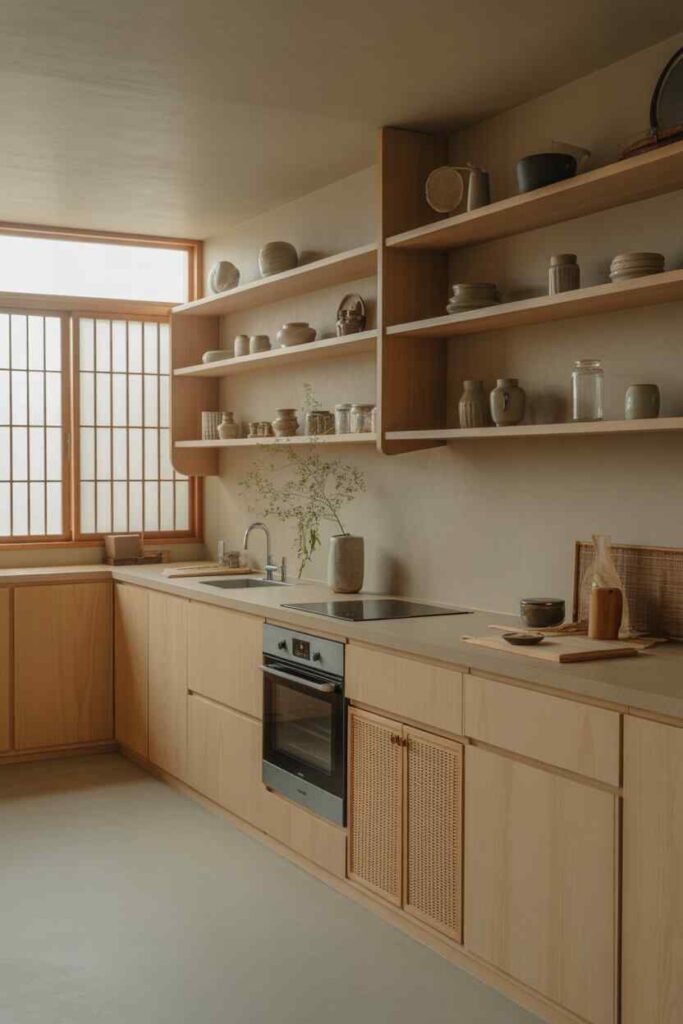
At the heart of a Japanese kitchen is the philosophy of simplicity and intentional living. Every element serves a purpose, and nothing feels excessive. Clean lines, natural materials, and uncluttered surfaces create a space that feels open and breathable.
Japanese kitchens are designed to support daily life, not overwhelm it. Storage is smart and often hidden, allowing countertops to remain clear. The layout prioritizes efficiency, making cooking feel smooth and intuitive. This design approach aligns beautifully with modern interior trends focused on functionality, wellness, and visual calm.
Read More About: Modern Boho Kitchen Ideas Unique, Budget-Friendly Inspiration for a Warm and Stylish Home
Japanese Kitchen Color Palettes That Feel Calm and Natural
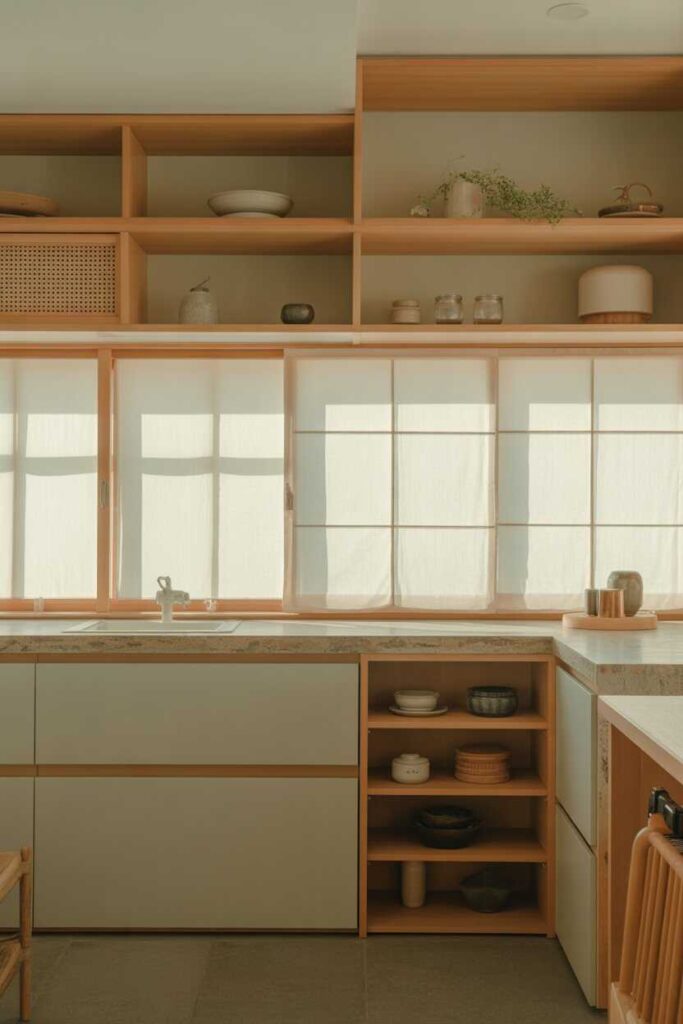
Color plays a subtle yet powerful role in Japanese kitchen design. Neutral tones dominate the palette, creating a soothing foundation. Soft whites, warm creams, pale wood tones, and gentle grays are commonly used to reflect light and enhance the sense of openness.
Accents are understated and inspired by nature. Think muted beige, stone gray, clay tones, and soft charcoal. These colors ground the space without overpowering it. Bright or bold hues are used sparingly, often through small decor elements or natural greenery.
For a budget-friendly refresh, painting cabinets or walls in warm neutral tones can instantly give your kitchen a Japanese-inspired feel without requiring a full renovation.
Cabinets That Embrace Minimalism and Function
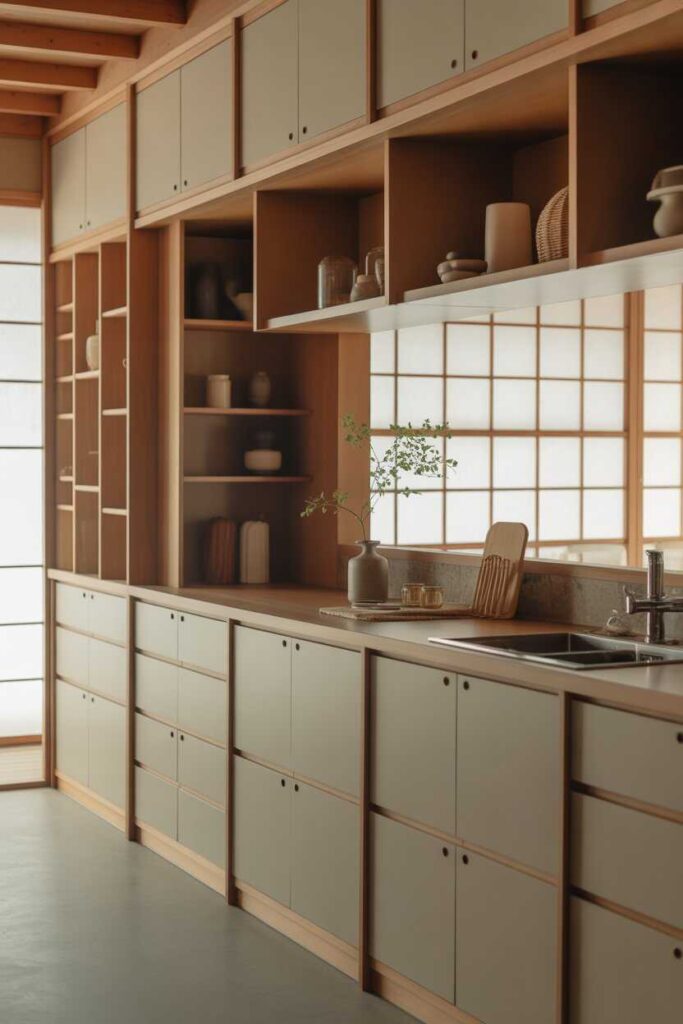
Cabinetry in a Japanese kitchen is sleek, simple, and highly functional. Flat-panel cabinets are a popular choice because they emphasize clean lines and visual harmony. Handles are often recessed or minimal, keeping the look uninterrupted and calm.
Natural wood cabinets are especially beloved, as they bring warmth and organic beauty into the space. Light wood tones like oak, ash, or birch are commonly used to maintain an airy feel. Painted cabinets in soft neutrals also work well when paired with wood accents.
The goal is to create a kitchen that feels cohesive and uncluttered, where storage blends seamlessly into the design rather than standing out.
Read More About: Coastal Kitchen Ideas Light, Breezy, and Budget-Friendly Inspiration for a Relaxed Modern Home
Countertops and Backsplashes Inspired by Nature
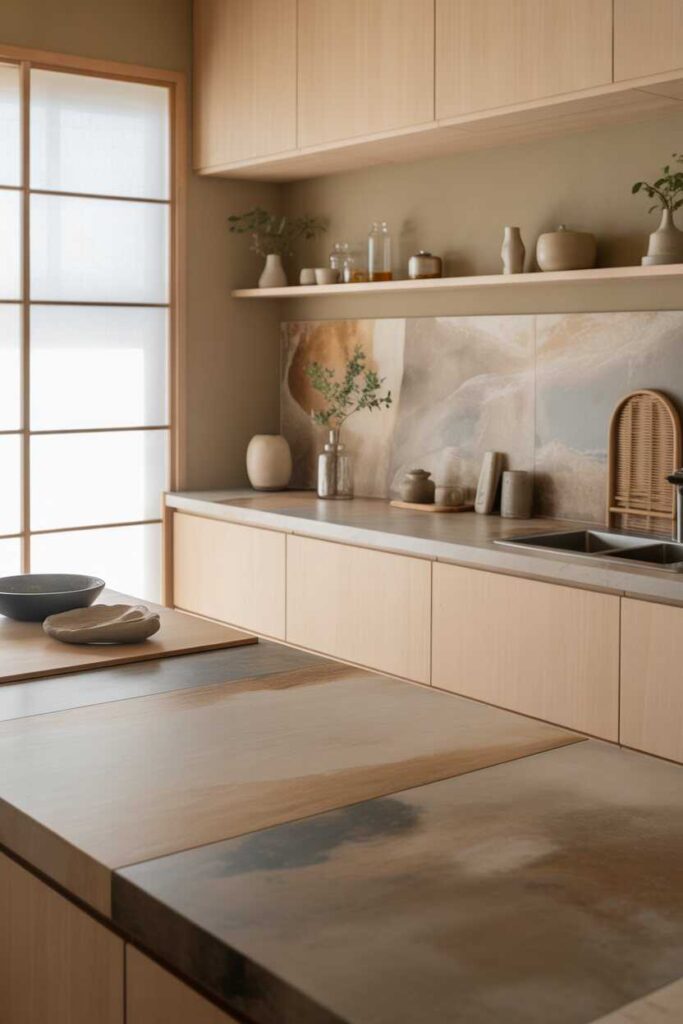
In a Japanese kitchen, materials matter. Countertops often feature stone, quartz, or concrete-inspired surfaces with subtle texture and muted tones. These materials feel grounded and timeless, reinforcing the connection to nature.
Backsplashes are usually simple and understated. Plain tiles, soft stone slabs, or neutral surfaces keep the focus on the overall harmony of the space. Texture is welcomed, but patterns are kept minimal to maintain visual calm.
For those interested in DIY home decor, simple tile updates or concrete-look finishes can recreate this aesthetic affordably while preserving the minimalist feel.
Flooring That Grounds the Space
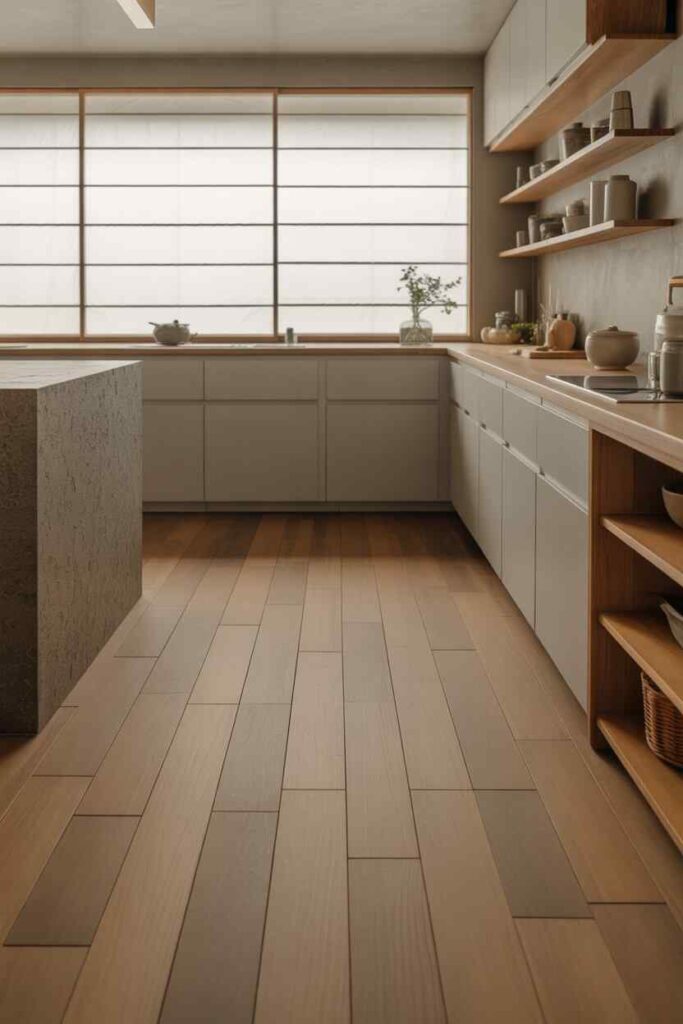
Flooring in a Japanese kitchen is chosen for both beauty and durability. Natural wood floors are a classic option, adding warmth and continuity throughout the home. The wood grain is often visible, enhancing the organic feel of the space.
In more modern homes, stone or tile flooring in neutral tones offers a sleek and practical alternative. These materials are easy to maintain and complement the minimalist aesthetic.
The key is choosing flooring that feels natural and understated, allowing the kitchen to feel grounded and serene.
Lighting That Feels Soft and Intentional
Lighting in a Japanese kitchen is designed to enhance calmness rather than draw attention. Natural light is highly valued, so windows are often left unobstructed or dressed with light, sheer coverings.
Artificial lighting is warm and gentle. Recessed lights, soft pendant fixtures, and subtle under-cabinet lighting create a layered effect without harsh brightness. The goal is to illuminate the space evenly while maintaining a cozy, peaceful atmosphere.
Switching to warm light bulbs and simple fixtures is an easy way to bring Japanese-inspired ambiance into any kitchen.
Storage Solutions That Keep Clutter Hidden
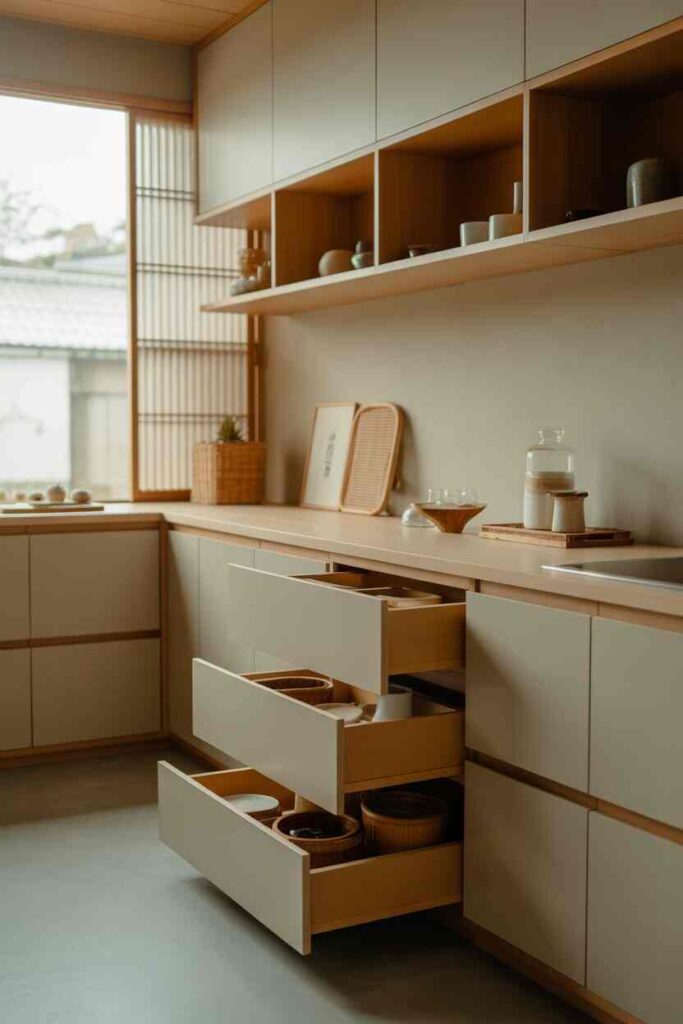
One of the defining features of a Japanese kitchen is smart storage. Cabinets, drawers, and built-in organizers keep everything in its place, reducing visual clutter. This makes the kitchen feel larger and more peaceful.
Open shelving is used selectively and styled with intention. Only a few essential items are displayed, often in neutral tones that blend seamlessly with the overall design. This approach supports the minimalist philosophy while still allowing personality to shine through.
This emphasis on organization mirrors ideas found in minimalist bathroom design, where function and simplicity go hand in hand.
Japanese Kitchen Décor That Feels Thoughtful and Calm
Decor in a Japanese kitchen is minimal but meaningful. Simple ceramics, wooden utensils, and handcrafted bowls add warmth and authenticity. These items are often displayed sparingly, allowing each piece to be appreciated.
Greenery plays an important role. A small potted plant or a branch in a simple vase brings life and softness into the space. Artwork is subtle, often abstract or nature-inspired, enhancing the tranquil atmosphere.
When styling for Pinterest, focus on clean surfaces, natural textures, and soft lighting to capture the essence of Japanese design.
Small Japanese Kitchens That Feel Open and Functional
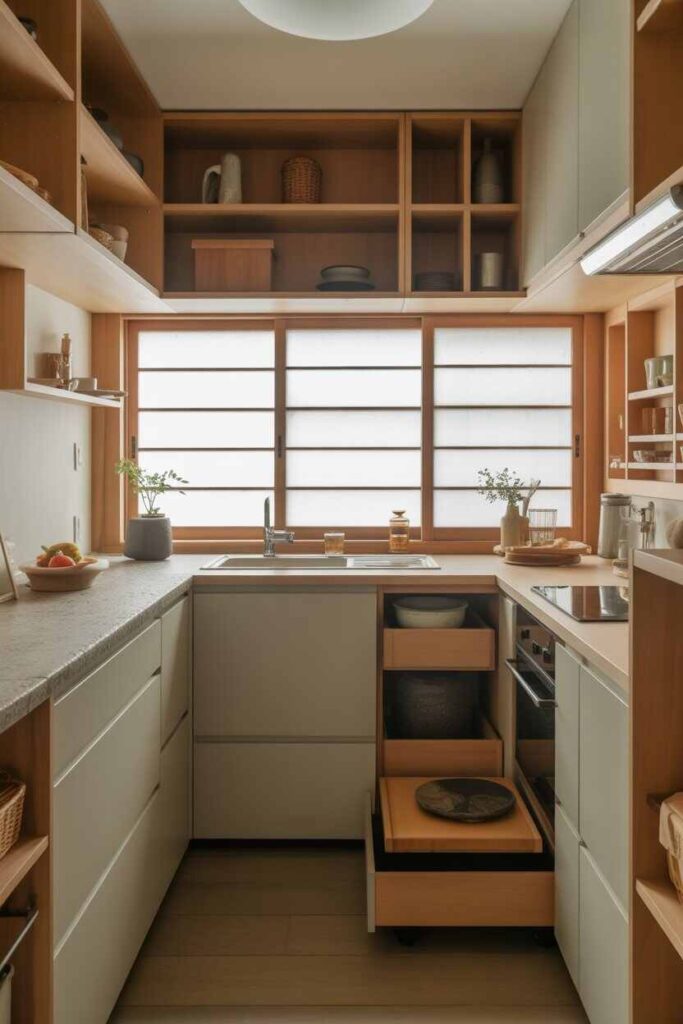
Japanese kitchens are often compact, making them ideal inspiration for small spaces. Thoughtful layouts, vertical storage, and minimal decor help maximize every inch.
Light colors and reflective surfaces make small kitchens feel larger. Sliding doors or open layouts enhance flow and reduce visual barriers. Even in tight spaces, Japanese kitchens feel calm and efficient.
These ideas are perfect for apartments or homes where space is limited but style and functionality are equally important.
Budget-Friendly Japanese Kitchen Ideas
Creating a Japanese kitchen doesn’t require expensive renovations. Simple changes can make a significant impact. Decluttering countertops, updating cabinet hardware, and introducing natural textures are affordable ways to shift your kitchen’s look.
Thrifted ceramics, wooden accessories, and neutral textiles add authenticity without high costs. The focus is on quality over quantity, which naturally supports budget-conscious design.
By embracing simplicity and intentionality, you can achieve a Japanese-inspired kitchen that feels refined and peaceful on almost any budget.
Modern Japanese Kitchens for Contemporary Homes
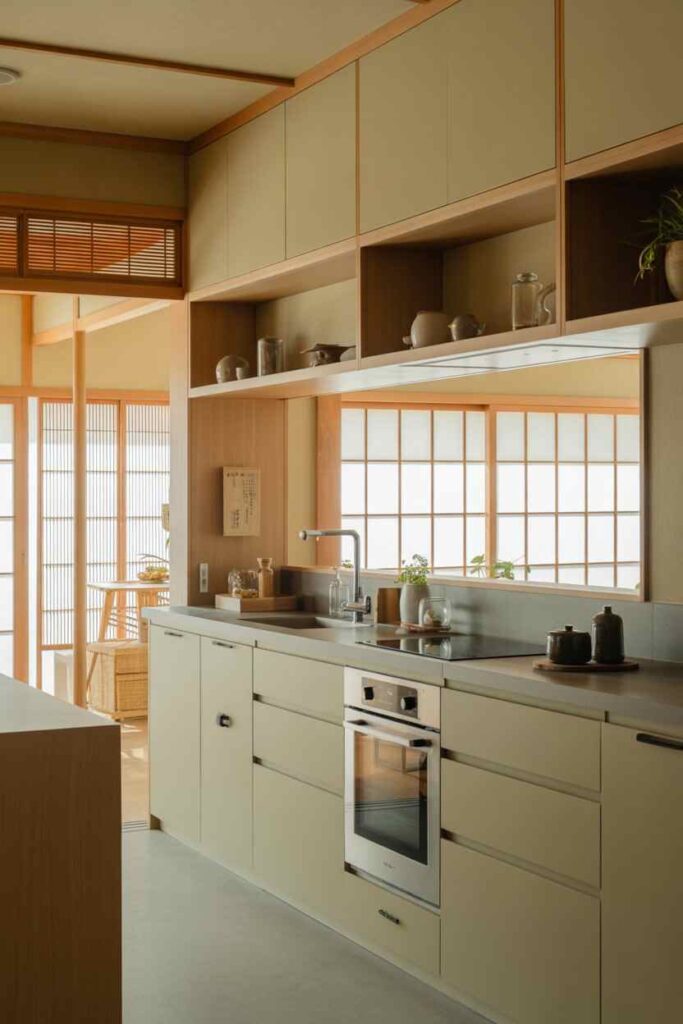
Modern Japanese kitchens blend traditional principles with contemporary design. Clean lines, integrated appliances, and sleek finishes create a look that feels current yet timeless.
This style pairs beautifully with open-concept homes and complements other serene spaces like a cozy bedroom or meditation area. The result is a cohesive home that feels calm and thoughtfully designed.
Japanese Kitchens and the Influence of Zen Living
The philosophy behind the Japanese kitchen is deeply connected to Zen living. The emphasis on mindfulness, simplicity, and balance transforms the kitchen into a space that supports mental well-being.
Cooking becomes a calming ritual rather than a chore. Clean surfaces and organized storage reduce stress, making the kitchen a place of comfort and focus.
This approach resonates with homeowners seeking more peaceful, intentional living environments.
Why Japanese Kitchens Are Timeless and Trend-Proof
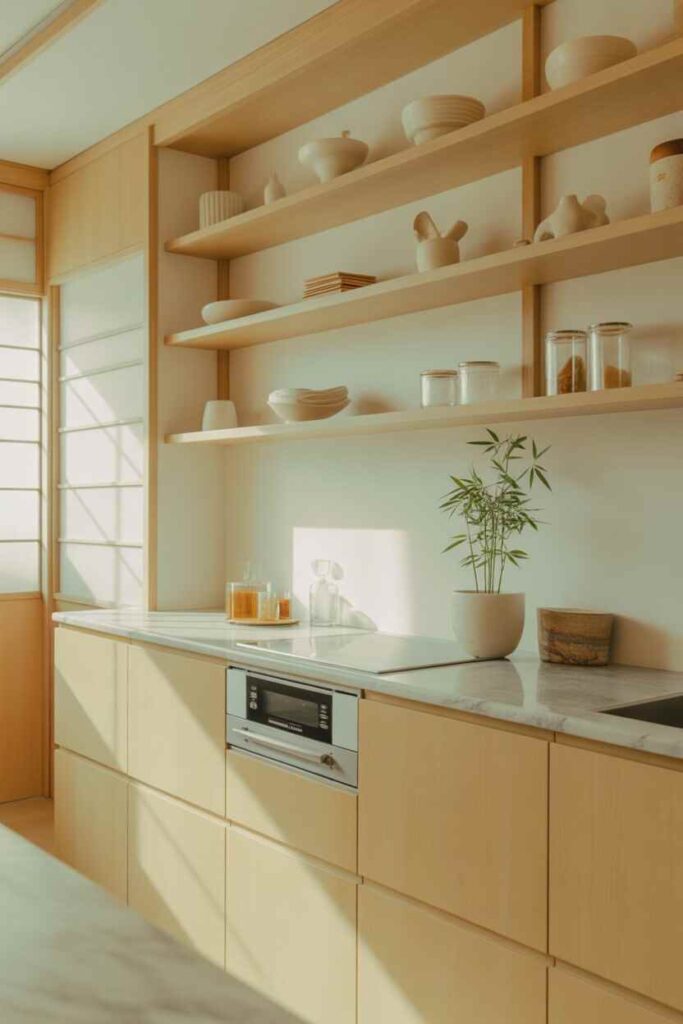
Japanese kitchens never go out of style because they prioritize function, quality, and harmony. They evolve gently over time without relying on fleeting trends.
As more people seek calm, clutter-free homes, Japanese kitchen design continues to grow in popularity. It offers a refreshing alternative to overly busy or decorative spaces.
Read More About: Dark Kitchen Ideas That Feel Bold Cozy and Surprisingly Timeless Modern Budget Friendly Inspiration for Every Home
Final Thoughts
Designing a Japanese kitchen is about creating a space that feels peaceful, functional, and deeply personal. It’s not about perfection but about intention. Each element should serve a purpose and contribute to the overall sense of calm.
Start with small changes. Simplify your space, choose natural materials, and embrace neutral tones. Let your kitchen evolve slowly and thoughtfully.
If you’re inspired to explore more decor inspiration, modern interior ideas, or mindful home design, keep experimenting and refining. A Japanese kitchen isn’t just a design choice — it’s a way of living.