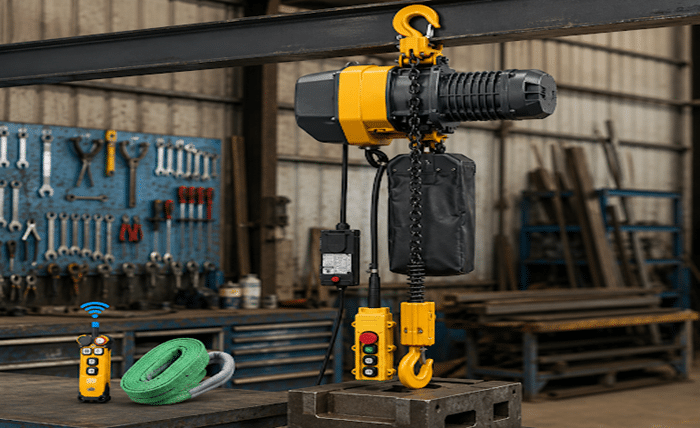
In an active workshop, heavy machinery and materials require more than human strength to be moved safely. A large motor may need to be lifted, a steel part must be placed carefully, or a machine component needs to be raised for repair. Doing these heavy jobs by hand can be tough, slow, tiring, or sometimes very difficult.
This is where an electric chain hoist wins the users’ hearts and proves to be the most useful tool. With enough control, it can lift, lower, and move heavy loads with very little physical effort. It offers power, control, and precision to everyday lifting tasks.
What Is an Electric Chain Hoist?
An electric chain hoist is a powerful machine used to lift and lower heavy loads. It uses an electric motor and a strong chain to move objects up and down.
It can be attached to an overhead beam, trolley, gantry, or other suitable support. The operator uses simple controls to move loads with minimum human effort.
Electric hoists come in different lifting capacities, speeds, and heights. Choosing the right model for the job helps help achieve safety and effective lifting.
Practical Uses of an Electric Hoist Chain in Warehouses and Workshops
From busy warehouses to production workshops, electric hoists help make heavy lifting easier and more comfortable. They are not just lifting machines—they are efficient tools that help workers handle demanding jobs with greater ease and more control.
Here are some of the most common applications.
1. Heavy Equipment Lifting
One of the major uses of an electric chain hoist in warehouses and workshops is lifting heavy machinery.
- Engines, pumps, motors, and compressors can be moved with less effort.
- Helps workers lift equipment to the required height for repairs or installation.
- Makes it smoother to position heavy parts accurately.
- Useful when machinery needs to be removed for inspection or maintenance.
- Lowers the need for workers to move heavy equipment by hand.
2. Handling Materials in Warehouses
Warehouses need to move heavy products, tools, parts, and equipment from one place to another on a regular basis. A chain hoist for warehouse is a perfect tool that can make it easy to lift heavy loads from the floor and place them on workstations, platforms, or other designated areas.
When an efficient overhead support is in place, it can make vertical lifting much easier and lessen the need for manual effort. This helps workers handle heavy materials more easily and smoothly.
3. Handling Large Components
Loading and unloading heavy or unusual-shaped items can be a very challenging job. It’s really very tough and tiring to handle bulky items in workshops and warehouses. A well-defined and properly designed electric chain lifting system can help to do this task more smoothly by lifting and lowering suitable loads in a more controlled and steady way.
Instead of depending only on physical strength, workers can use a hoist to handle the lifting force and save valuable time. However, a hoist is not a replacement for a forklift or crane. The right lifting tool depends on the load, workspace, access, and support structure.
4. Assisting with Machine Repairs
Maintenance work often needs workers to raise up or remove heavy machine parts. An electric chain hoist can make this possible by moving up heavy components to the desired height.
For example, technicians may use a hoist to elevate a motor out of a machine or hold a large part in place during inspection and repair. This gives workers better control and makes heavy maintenance tasks more practical to manage.
5. Positioning Heavy Parts Easily
Raising the load is only the beginning. Once a heavy object is raised from the ground, it may need to be placed in the right position. Proper positioning matters because a small alignment error can affect the final result.
Here, this tool helps operators to control the movement of suspended loads within the equipment’s limits. This is helpful when installing machines, aligning parts, or placing heavy components on supports.
6. Handling Metal Parts
Metalworking shops mostly deal with heavy items such as steel parts, pipes, and fabricated assemblies. Moving these items by hand can be very difficult, especially when they are large in size or hard to carry.
An electric chain hoist can help bring up and move suitable loads when they are properly secured with the right lifting accessories. This can make it easier to move materials between different production stages and decrease unnecessary manual handling.
7. Installing Large Machines
Installing bulky equipment often requires careful lifting and positioning. An electric chain hoist can help workers raise heavy parts to the required height and keep them lifted in a controlled position during installation.
The hoist’s lifting capacity, support structure, rigging, and work area should always be suitable for the job. Choosing the best setup helps make installation smoother and more controlled.
8. Assisting Assembly Work
Large machines and products often consist of many heavy parts. Some components can be challenging to move or position manually because of their size or weight.
An electric chain hoist can help workers raise suitable parts and place them correctly during assembly. This is especially useful in workshops where large machines are built regularly.
A properly designed lifting setup can make the assembly process easier and reduce unnecessary manual effort.
9. Reducing Manual Effort
Some lifting tasks become tiring when they are repeated many times. An electric chain hoist can reduce the physical effort needed for suitable lifting jobs.
However, workers still need to follow safe handling practices and understand the load, rigging, controls, and workplace procedures.
10. Helping with Repairs and Projects
Workshops handle many different tasks, from repairing machines to building custom parts. An electric chain hoist can help lift and move suitable components during these projects.
Its flexibility makes it a useful tool when workers need to handle different heavy items throughout the day.
Why Choosing the Right Hoist Matters
Not every electric chain hoist is right for every job. Choosing a hoist only because it looks powerful can lead to some major issues.
Before using a hoist, you need to focus on these points.
- Lifting capacity
- Lifting height
- How often it will be used
- Work environment
- Overhead support
- Lifting accessories
- Lifting speed and control
- Manufacturer’s instructions
Electric Chain Hoist or Manual Lifting?
The difference becomes clearer when heavy loads require frequent moving. Manual lifting requires more physical effort and may be difficult for heavy or large items. A hoist provides powered lifting, making it easier to move up and lower suitable loads with more control.
For workplaces that handle heavy materials regularly, this can reduce physical effort and improve workflow, saving time.
Conclusion
An electric chain hoist is a very useful tool for many warehouse and workshop tasks. It can help lift machinery, move heavy parts, support repairs, and assist with installation and assembly.
The only key is choosing the right hoist for each job. Its lifting capacity, support structure, accessories, operating conditions, and safety procedures should all be considered.
If used properly, an electric hoist can make heavy lifting more controlled and efficient.