The UK doesn’t compete on volume. It never really has. But when a component needs to hold a tolerance of ±0.01mm, or when a medical device has to perform flawlessly inside the human body, UK manufacturers consistently get the call.
That’s where the commercial advantage lives, and it’s a bigger story than most business leaders realise. Let’s explore how precision has become the UK’s sharpest competitive edge.
Small Shops, Tight Tolerances, Global Contracts
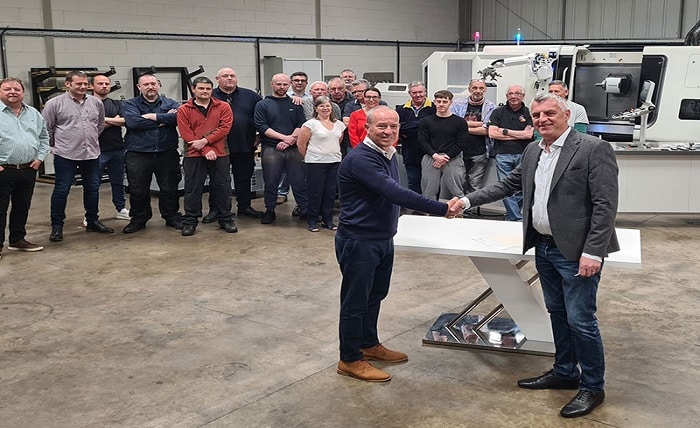
You might picture UK manufacturing as large factories stamping out parts by the thousand. In practice, the vast majority of British engineering firms are small operations, often with 10 to 50 employees, running advanced CNC machines in relatively modest workshops. What they lack in scale, they make up for in capability.
These firms regularly win contracts from aerospace primes, medical device companies, and defence suppliers who need components machined to extremely tight tolerances. We’re talking about parts where a deviation of a few microns can mean a failed inspection or, worse, a safety issue in the field.
According to Make UK, the sector contributed £220 billion in output to the UK economy in 2024, supporting 2.6 million jobs. Of the UK’s 269,000 manufacturing organisations, over 90% are SMEs. A significant portion of that output comes from precision-focused firms that have built specialist niches rather than trying to compete with high-volume producers in Asia.
Why CNC Machining Gives UK Firms an Edge
CNC machining is the backbone of precision manufacturing. Multi-axis machines can now produce geometries that would have been impossible to cut manually, and UK machinists have been early adopters of five-axis technology, in-process measurement, and automated tool changing.
What makes this commercially powerful is repeatability. A CNC programme will produce the same part to the same spec whether it’s the first component or the five hundredth. For buyers in aerospace or medical devices, that consistency is everything. It means fewer rejected batches, shorter qualification cycles, and lower total cost of ownership, even if the per-unit price is higher than a mass-produced alternative.
Many UK shops also run lights-out machining overnight, keeping lead times competitive without needing to scale up headcount. It’s a smart use of capital that lets small firms punch well above their weight.
Material Selection and the Precision Equation
Getting the machining right is only half the job. The material has to perform too. In sectors like aerospace and medical, engineers will specify everything from titanium alloys and stainless steels to high-performance engineering plastics, depending on what the application demands.
Engineering plastics have become increasingly popular for precision components where low friction, chemical resistance, or weight reduction matters. Acetal (also known as POM) is a good example. It machines cleanly, holds tight dimensions, and performs well in moving assemblies. PEEK and nylon are other common choices, each suited to different thermal and mechanical demands.
For flat stock and cut-to-size blanks, machinists will typically source acetal sheet in the UK from specialist plastics suppliers who hold a range of thicknesses, making it a go-to option for both prototyping and short-run production.
Precision manufacturers don’t just pick a material off the shelf. They match it to the application, the machining process, and the end-use environment. That expertise is a genuine differentiator.
Aerospace, Medical, and Defence: Where Precision Pays
These three sectors are where UK precision manufacturers earn their reputation and their margins.
In aerospace, components for engines, landing gear, and flight control systems all require certification to AS9100 standards. The qualification process is rigorous, and once a supplier is approved, switching costs are high. That creates long-term relationships and predictable revenue for UK firms that invest in quality systems.
Medical device manufacturing demands similar rigour. Parts for surgical instruments, implants, and diagnostic equipment must meet ISO 13485 requirements. UK manufacturers with cleanroom capabilities and full traceability from raw material to finished part are well positioned to serve this growing market.
Defence contracts often require UK-based production for security reasons, giving domestic manufacturers a natural advantage. Components for armoured vehicles, communications equipment, and weapons systems all demand precision machining and strict quality documentation.
The Heritage Factor in Modern Manufacturing
The UK’s engineering heritage matters commercially, not just historically. Decades of experience in sectors like Formula 1, oil and gas, and nuclear power have built a deep pool of machining knowledge that’s hard to replicate quickly. The Motorsport Valley cluster alone employs around 40,000 people and contributes over £9 billion a year to the UK economy, with much of that expertise feeding directly into precision manufacturing supply chains.
Apprenticeship programmes and technical colleges continue to feed skilled operators into the workforce, even as automation takes on more of the routine work. That said, with 46,000 manufacturing vacancies currently unfilled across the UK, the pipeline of talent remains one of the sector’s biggest challenges.
This combination of experienced machinists and modern technology is what allows UK firms to take on complex, high-value jobs that automated factories elsewhere can’t handle with the same confidence.
Precision as a Business Strategy, Not a Buzzword
UK manufacturers aren’t trying to out-produce China or compete on price with Eastern European subcontractors. They’ve found a smarter path: specialise in work where quality, traceability, and technical expertise command a premium.
For business leaders looking at where British industry is headed, precision engineering is one of the clearest success stories. The firms that invest in capability, certifications, and the right materials will continue to win work that others simply can’t deliver.