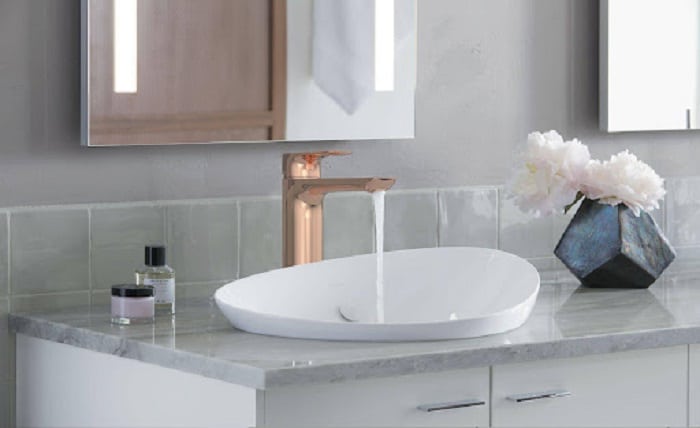
A wash basin is one of the most visible fixtures in any washroom. Whether redesigning your bathroom or building it from scratch, wash basins can say a lot about your home. Choosing the right basin means balancing the perfect look, aesthetics, plumbing, maintenance, and how well the fixture works with the rest of the space.
Understanding the types of wash basins available today and what truly separates one from another is a must. This difference can let you distinguish between a basin that simply functions and one that defines the room around it.
This guide covers the main types of wash basins, the materials they come in, and what to check before specifying one for a project.
Quick Summary
Seven basin types cover most projects. Here’s how they compare at a glance:
- Pedestal basin: best for small or classic-style bathrooms since it hides plumbing and requires minimal floor space.
- Wall-mounted wash basin: best for tight spaces and hospitality washrooms; most space-saving, easiest to clean.
- Undercounter basin: best for a seamless counter look; no rim, and much easier to wipe down.
- Vessel basin: best for a design statement; pairs with a tall or wall-mounted faucet.
- Vanity top basin: best for storage-focused spaces; basin and counter come as one unit.
- Semi-recessed basin: best for small counters where you can create some vessel-style presence.
- Corner basin: best for small and cozy layouts, so it fits directly into a corner.
- Best all-round material: vitreous china, balances durability, ease of cleaning, and cost for most projects.
Types of Wash Basins
Most wash basins are categorised by how they are installed, since this single decision shapes both the visual character of the room and the practical demands, plumbing, counter space, and everyday cleaning that follow. Here are the seven styles that cover nearly every hand wash basin and suit almost every bathroom project.
-
The Pedestal Basin
A pedestal basin brings a sense of timeless elegance to any bathroom. Its slender, freestanding base gracefully supports the bowl while concealing the plumbing beneath, creating a clean, uncluttered look that suits classic and contemporary interiors alike. Because it takes up very little floor space, it’s a natural fit for compact bathrooms, and its smooth surface makes it easy to keep clean.
-
The Wall-Hung Basin
A wall-hung basin, also called a wall-mounted wash basin, is fitted directly onto the wall with no visible support beneath it, leaving the floor open and giving even a modest bathroom a more spacious feel. Its contemporary profile suits compact and minimalist-styled bathrooms particularly well. As it comes in a range of shapes and sizes, it can be tailored to almost any bathroom aesthetic.
-
The Undercounter Basin
An undercounter basin is installed beneath the countertop, so the surface flows unbroken into the bowl for a clean, minimal look. It’s a natural fit for modern bathrooms that want an uncluttered feel. As it doesn’t interrupt the counter, it makes the most of spaces where surface area is limited. With no raised rim to trap dust or spills, it’s also one of the easiest basin types to keep clean.
-
The Vessel Basin
A vessel basin sits entirely above the counter. Its bold and sculptural form instantly elevates the look of any bathroom. Resembling a shaped bowl or an artistic vessel, the hand wash basin suits anything from a contemporary space to a more classic interior. As it sits above the counter, it pairs naturally with a tall or wall-mounted faucet, creating a balance between both.
-
The Vanity Top Basin
A vanity top basin is built to sit on a matching vanity unit, so the basin and counter seem as one considered piece rather than two separate purchases. It suits projects where generous storage matters as much as design, such as guest bathrooms or hotel rooms. However, as the basin and unit are designed to work together from the outset, it helps to create the perfect distinct outcome for the space.
-
The Semi-Recessed Basin
A semi-recessed basin blends the practicality of an undercounter basin, blending seamlessly with the beauty of countertop basins. Mounted partly into the countertop, the front edge extends outward to create a distinctive line, while leaving the remaining space clean and maintainable. This design makes the most of counter space and is considered an excellent choice for smaller bathrooms or for projects that need extra room for toiletries and accessories.
-
The Corner Basin
A corner basin turns a bathroom’s most awkward space into an excellent opportunity. Fitted neatly into almost every corner of a bathroom, it allows you to make the most of the layout. As it is available to be paired with classic to contemporary designs, it can be installed on a pedestal or mounted directly to the wall. Depending on the plumbing work and the desired look the project calls for, this basin is a practical choice that comes with space-saving benefits.
Wash Basin Materials
Each material offers some distinct advantages. Understanding the differences allows you to choose the right material that complements both your design preferences and practical requirements.
-
Vitreous China or Fine Ceramic:
This is the most standard option for most premium basins, valued for its non-porous glazed finish, stain resistance, and long service life. The material allows sculpted forms to hold their precision for decades.
-
Fireclay:
This material is used to build and design basins at exceptionally high temperatures for superior density and a soft, matte-glazed surface. Among the most durable materials available, this is used for heavier and statement pieces.
-
Stone and Marble:
Naturally veined and individually patterned, so no two wash basins are ever quite look similar. This is one of the most opulent choices, though it requires more attentive and regular care.
-
Glass:
Glass material is ideal to create a contemporary look and reflect light, and is best suited to vessel-style basins where its translucence and depth of colour can be fully appreciated. However, the material requires gentler handling than ceramic.
-
Metal:
Typically available in brass or stainless composites, a modern choice that develops character with use and pairs naturally with industrial or minimalist interiors.
However, the right wash basin material ultimately depends on your bathroom design, maintenance preferences, and budget. Before making a decision, explore different material options online or visit a trusted showroom to compare their finish, texture, and durability in person. Seeing the materials firsthand can help you choose the option that best complements your space and long-term needs.
How to Choose the Right Wash Basin Considering Multiple Aspects?
Selecting a basin comes down to five considerations, best weighed together rather than in isolation.
-
Space First
A wall-hung or corner basin frees the floor in a compact bathroom, while a pedestal or vanity top basin suits a room with more room to spare. Consider the layout of your bathroom and explore the most suitable options that add visual appeal and practicality to the space.
-
Counter Needs
If your daily essentials, skin care, a soap dispenser, or a folded towel need a place nearby, an undercounter or semi-recessed basin keeps that space intact. It provides you with some extra space without making things look cluttered.
-
Plumbing Compatibility
Vessel basins generally call for a taller or wall-mounted faucet, while pedestal basins neatly conceal standard plumbing. Confirming fittings before purchase can help you to avoid a costly mismatch later.
-
Water Conditions
In hard-water regions, wall-hung and undercounter basins are easier to keep free of mineral buildup, since they offer fewer surfaces for deposits to settle upon. When it comes to material, vitreous china is often the most practical choice due to its smooth, non-porous glazed surface, which resists stains and makes hard-water deposits easier to clean compared to natural stone or textured finishes.
-
Ergonomic Height
Most basins are installed with the rim positioned between 80 and 85 centimetres from the floor, though the ideal height depends on the basin’s depth and the user’s needs. Therefore, always confirm a model’s exact dimensions before installation.
Select the Right Basin and Elevate the Aesthetic Appeal of Your Space
Though the wash basin is a small fixture, it shapes how a bathroom looks and works every day. Whether the project’s brief calls for a pedestal basin’s simplicity, a wall-hung basin’s space-saving profile, or a vessel basin’s visual impact, choosing the perfect hand wash basin or wall-mounted basin should complement the look while balancing aesthetics and practicality.