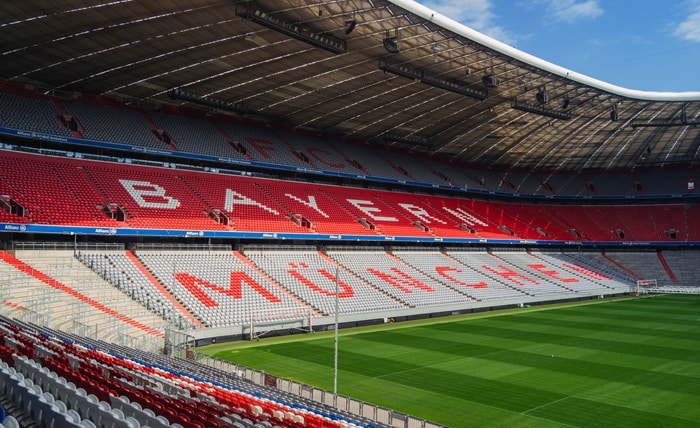
Evaluating venue-specific performance requires isolating the exact environmental and structural mechanisms that cause a team’s output to fluctuate between home grounds and away fixtures. During the 2009–2010 Premier League season, aggregate form tables consistently misled casual observers because several clubs operated under extreme tactical polarization depending on where a match was contested. Treating a team as a static entity across varying stadiums overlooks how pitch dimensions, localized crowd pressure, and tactical postures fundamentally transform match outcomes. Deconstructing historical venue data provides an objective framework for isolating true competitive advantages and avoiding mispriced match spreads.
The Structural Drivers Behind Home Ground Overperformance
Home advantage in professional football is not an abstract psychological concept, but a measurable set of physical and tactical variables. In the 2009–2010 season, host sides benefited from spatial familiarity, tailored grass cuts, and the tactical liberty to commit extra numbers forward without immediate defensive anxiety. When a team plays in front of its own supporters, fullbacks consistently push higher up the pitch, which raises crossing volume and sustains territorial pressure. This aggressive spatial occupation forces visiting defenses into deeper containment shapes, significantly increasing the probability of winning second balls in dangerous attacking areas.
Spatial Compression Mechanics in Compact Stadiums
When visiting technical sides traveled to compact grounds with tight touchlines, their usual passing networks broke down under rapid spatial compression. Tight ground dimensions reduce the effective operating width for wingers, allowing defending teams to shift their defensive blocks laterally with minimal physical exhaustion. Recognizing how physical stadium constraints neutralize expansive attacking systems prevents analysts from assuming an elite away favorite can replicate its standard goal-scoring rate in congested conditions.
Dissecting Extreme Venue Disparities Across the League Table
The 2009–2010 campaign showcased notable disparities where mid-table and lower-tier clubs accumulated almost their entire seasonal point totals within their own stadiums while suffering catastrophic away runs. Examining these specific case studies illustrates why blending home and away metrics into a single seasonal average produces heavily flawed projections.
- Burnley: Collected 21 of their first 24 points at Turf Moor by deploying intense physical pressing, contrasted with an away record that yielded only a single win all season.
- Birmingham City: Established a 12-match unbeaten home run through a disciplined defensive low block that conceded fewer than a goal per game at St Andrew’s.
- Stoke City: Leveraged localized atmospheric conditions and specialized set-piece routines at the Britannia Stadium to consistently disrupt top-tier visiting opponents.
- Wolverhampton Wanderers: Adjusted their tactical baseline away from home by retreating into a passive 4-5-1 formation, which severely throttled their open-play shot generation.
These operational case studies prove that venue context alters a squad’s fundamental identity rather than merely producing marginal variations in performance. A club capable of overwhelming opponents at home through aggressive territorial pressing may completely abandon offensive ambition on the road to protect against heavy defeats. Analysts who evaluate fixtures without separating venue-specific tactical models inevitably miscalculate both goal totals and handicap lines.
Tactical Retraction and the Reality of Away Match Management
When clubs transitioned from home fixtures to away games in 2009–2010, managers frequently altered their starting systems to prioritize defensive containment over chance creation. Mid-table sides that routinely deployed an expansive 4-4-2 setup at home shifted to a conservative single-striker system on the road, deliberately surrendering possession to congest the central midfield. This structural retreat reduced their offensive output to sporadic counter-attacks and dead-ball opportunities, fundamentally altering the pacing of the match and lowering overall scoring expectancy.
| Club Tactical Profile | Home Tactical Posture (2009–2010) | Away Tactical Adjustment | Market Line Implication |
| Direct Physical Units (e.g., Stoke, Blackburn) | High-tempo aerial pressure and aggressive throw-ins | Deep low block, conceding territorial share | High value on plus-handicaps at home; extreme under-totals away |
| Expansive Mid-Table Sides (e.g., Aston Villa, Everton) | Overlapping wide play and sustained crossing | Structured mid-block relying on direct vertical breaks | Strong handicap resilience away against possession-heavy favorites |
| Relegation Contenders (e.g., Hull, Burnley) | High-intensity early physical pressing | Passive defensive containment with minimal recovery speed | Highly vulnerable to multi-goal defeats in away fixtures |
| Technical Contenders (e.g., Arsenal, Chelsea) | Fluid positional rotation and high pressing | Controlled possession with measured defensive risk | Prone to narrow margins and late-game defensive pressure away |
The structured comparison above confirms that tactical adjustments across venues alter the expected goal volume and competitive margin of every fixture. When an away team intentionally compromises its offensive functionality to secure a point, standard goal expectancy formulas based on seasonal averages lose their predictive validity. Accurate handicapping requires adjusting baseline projections to match the specific containment strategy deployed on the road.
The Distorting Effect of Traveling Schedules on Defensive Fatigue
Away fixtures impose logistical burdens and recovery constraints that compound over the course of a thirty-eight-game calendar. In 2009–2010, visiting teams facing consecutive away matches exhibited noticeable declines in defensive recovery runs and second-half aerial challenge success rates. When physical fatigue sets in during the final twenty minutes of an away fixture, defensive lines naturally drop deeper into their own penalty area, inviting sustained pressure that frequently results in late concessions.
Observing how these physical factors influence real-time pricing, experienced market participants often monitor opening line variations through an established betting platform before liquidity consolidates. Tracking early movements and handicap shifts via ufabet provides direct visibility into how sharp syndicates price late-game fatigue models and travel strain, ensuring that critical physical variables are accounted for before kickoff.
Misjudging Elite Brands in Hostile Away Environments
Public betting tendencies frequently overvalue top-tier clubs when they travel to historically hostile grounds, assuming that individual player superiority will effortlessly overcome collective physical resistance. In the 2009–2010 season, Liverpool and Arsenal repeatedly dropped points away from home against aggressively physical underdogs who disrupted their rhythm through tactical fouls and aerial dominance. The betting market often failed to price these environmental friction points correctly, leaving visiting favorites burdened with unrealistic multi-goal handicaps.
Under circumstances where sports markets demonstrate extreme pricing efficiency on high-profile away favorites, observing fixed mathematical outcomes within a regulated casino can offer a clear comparative lesson in how independent probabilistic events operate without the complex variables of pitch conditions and human psychology.
Motivation Asymmetry in Late-Season Away Fixtures
As the competitive season nears its conclusion, the influence of home and away splits becomes intertwined with mathematical necessity. Mid-table teams with no threat of relegation and no prospect of continental qualification routinely display significant drops in physical intensity when traveling during the final month of the campaign. Conversely, relegation-threatened hosts play with heightened desperation, turning home underdogs into formidable opponents capable of overturning standard form projections against technically superior visiting squads.
Summary
Accurately evaluating home and away form in the 2009–2010 Premier League required separating aggregate statistics into venue-specific tactical identities, spatial ground dimensions, and physical travel constraints. Venue splits are not random fluctuations; they reflect deliberate managerial strategies, localized pitch conditions, and shifting competitive incentives. By analyzing how teams structurally adapt when moving between home comfort and hostile away grounds, bettors can bypass superficial form tables and identify genuine value in mispriced match markets.